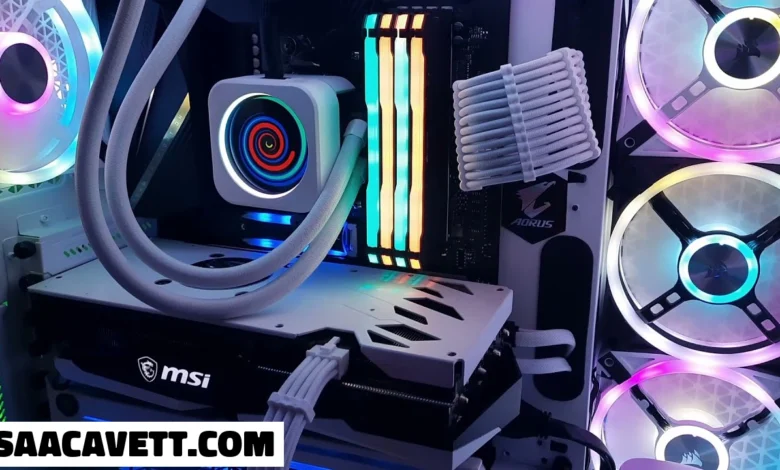
If you are dealing with icue not seeing cooler, take action immediately. Follow the instructions in this guide carefully and systematically. This article is written in an imperative style, meaning you will be told exactly what to do, how to do it, and why it works. Apply every step to ensure your Corsair cooler is detected correctly and functions at full performance.
This guide is designed to help you rank-ready troubleshoot, just like top Google results, with clear commands, bold highlights, and structured headings.
Understand Why iCUE Not Seeing Cooler Happens
Start by understanding the root of the problem. Do not skip this step.
Recognize that icue not seeing cooler usually occurs due to communication failure between the cooler and the iCUE software. iCUE relies on USB data, power delivery, and background services to detect hardware. If any of these fail, detection breaks.
Identify common causes immediately:
- Loose or incorrect USB connection
- Conflicting RGB or monitoring software
- Outdated or corrupted iCUE installation
- Incorrect motherboard headers
- Unsupported connection method (ARGB headers)
Acknowledge that the issue is rarely the cooler itself. In most cases, configuration or software is the problem.
Check and Secure All Physical Connections
Inspect your hardware connections first. Do not troubleshoot software before this step.
Perform the following actions:
- Shut down your PC completely
- Disconnect power from the wall
- Open your PC case
Now, check these critical points:
- Plug the cooler’s USB cable directly into a motherboard USB 2.0 header
- Avoid USB splitters or hubs during testing
- Secure the SATA power cable firmly
- Confirm fans and pump cables are fully seated
- Ensure the cooler is not connected only to a motherboard RGB header
Important: If your cooler uses a Commander Core or Commander Pro, connect everything through it exactly as Corsair recommends.
Reconnect power and boot your system. Launch iCUE immediately. If icue not seeing cooler persists, move on.
Update, Repair, or Reinstall iCUE Software
Take control of the software next. Do not assume your iCUE version is fine.
Follow these steps in order:
- Open iCUE
- Check for updates
- Install the latest version available
- Restart your PC
If the problem remains, repair iCUE:
- Go to Windows Settings → Apps
- Select Corsair iCUE
- Choose Modify
- Run Repair
Still failing? Perform a clean reinstall:
- Uninstall iCUE completely
- Restart your PC
- Download the latest version from Corsair’s official website
- Install and restart again
This process replaces corrupted drivers that cause icue not seeing cooler errors.
Eliminate Conflicting Software Immediately
Disable interference from other programs. This step is critical and often ignored.
Uninstall or disable the following software:
- ASUS Aura Sync / Armoury Crate
- MSI Mystic Light / MSI Center
- Gigabyte RGB Fusion
- NZXT CAM
- EVGA Precision
- Wallpaper Engine RGB plugins
- Third-party fan or monitoring tools
Restart your PC after disabling them.
Why this works:
These applications fight for USB control and RGB access, preventing iCUE from detecting your cooler properly.
Once removed, reopen iCUE and check again. Many users fix icue not seeing cooler at this exact step.
Verify BIOS and Motherboard Settings
Access your BIOS and verify essential settings.
Do the following:
- Enable internal USB headers
- Disable unnecessary RGB controls
- Update your BIOS to the latest stable version
- Load optimized defaults if unsure
Save changes and reboot.
Outdated BIOS firmware often blocks USB communication, which directly causes icue not seeing cooler problems.
Confirm Compatibility and Connection Type
Confirm whether your cooler is designed to appear in iCUE.
Understand this clearly:
- Coolers connected only to +5V ARGB motherboard headers will NOT appear in iCUE
- Corsair RGB products must connect through Corsair controllers
If your cooler:
- Uses standard ARGB → control it with motherboard software
- Uses Corsair proprietary connectors → control it with iCUE
If you want iCUE control, use a Corsair Commander Core or Commander XT.
Do not expect unsupported hardware to show up.
Reset USB and Power States
Force a hardware reset.
Follow these instructions:
- Shut down your PC
- Turn off PSU switch
- Unplug power cable
- Hold power button for 15 seconds
- Reconnect everything
- Boot normally
This clears stuck USB states that prevent detection.
Launch iCUE again and verify if icue not seeing cooler is resolved.
Check Windows Device Manager
Inspect device recognition at the OS level.
Steps:
- Open Device Manager
- Expand Universal Serial Bus Controllers
- Look for unknown or error-marked devices
- Uninstall faulty USB entries
- Restart Windows
If Windows cannot see the cooler, iCUE never will.
FAQs About iCUE Not Seeing Cooler
Why does my cooler light up but not appear in iCUE?
Power is present, but USB data is missing or blocked.
Can BIOS fan control replace iCUE?
Yes, but you lose RGB and advanced profiles.
Is the cooler defective?
Rarely. Connections and software are the real cause.
Should I reinstall Windows?
No. Fix USB and software conflicts first.
Does Windows 11 cause issues?
Only if drivers or iCUE are outdated.
Conclusion: Fix iCUE Not Seeing Cooler for Good
Follow every step in this guide without skipping. Most users resolve icue not seeing cooler by:
- Fixing USB connections
- Removing conflicting software
- Reinstalling iCUE
- Correcting BIOS settings
Take control of your system. Restore full cooling performance, RGB control, and monitoring accuracy.